The History
A History of Golf's Finest Shoe
Brockton, Massachusetts, 1857 to 2009
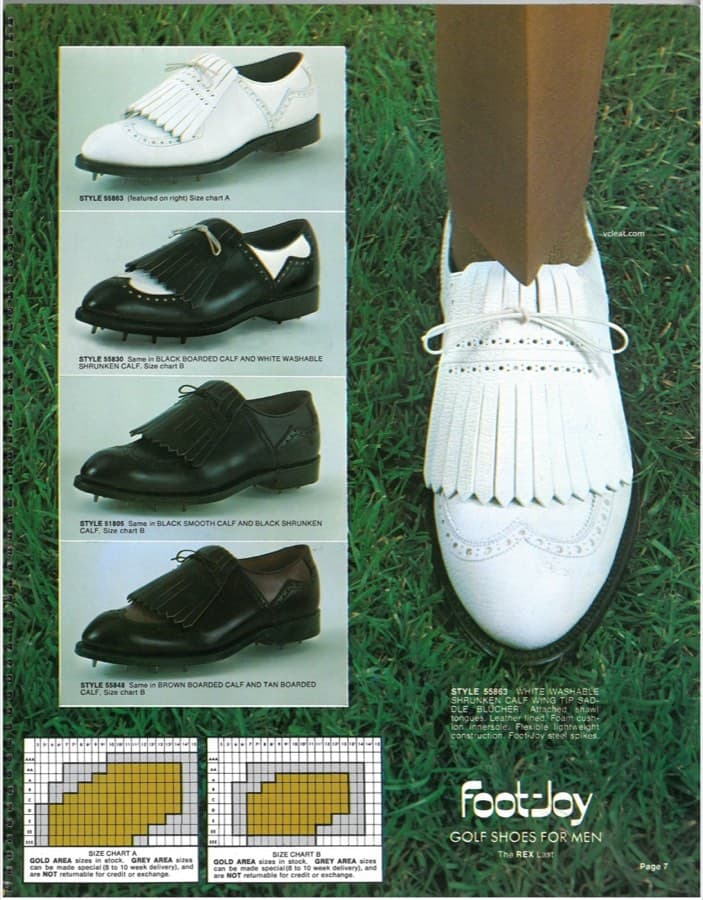
Photographs from the 1970 Foot-Joy catalogue, the Library of Congress and Wikimedia Commons
The shoe city, 1857–1910
The FootJoy story begins in 1857, when Frederick Packard left his father’s boot-making business to set up on his own in Brockton, Massachusetts. Brockton was then the shoe capital of America. Its factories supplied over half of all the footwear made in the United States, and Packard’s firm, the Burt and Packard Shoe Company, was one of many in a busy local trade.
The company made its name early. It was among the first in the region to use automated stitching machines and, rather more surprisingly, among the first to make shoes as distinct left and right pairs instead of two identical forms. The business was later renamed the Field and Flint Company, and for decades it made sound, well-made shoes for a general market. Nothing about it yet suggested golf.
A shoe that’s different, 1910–1957
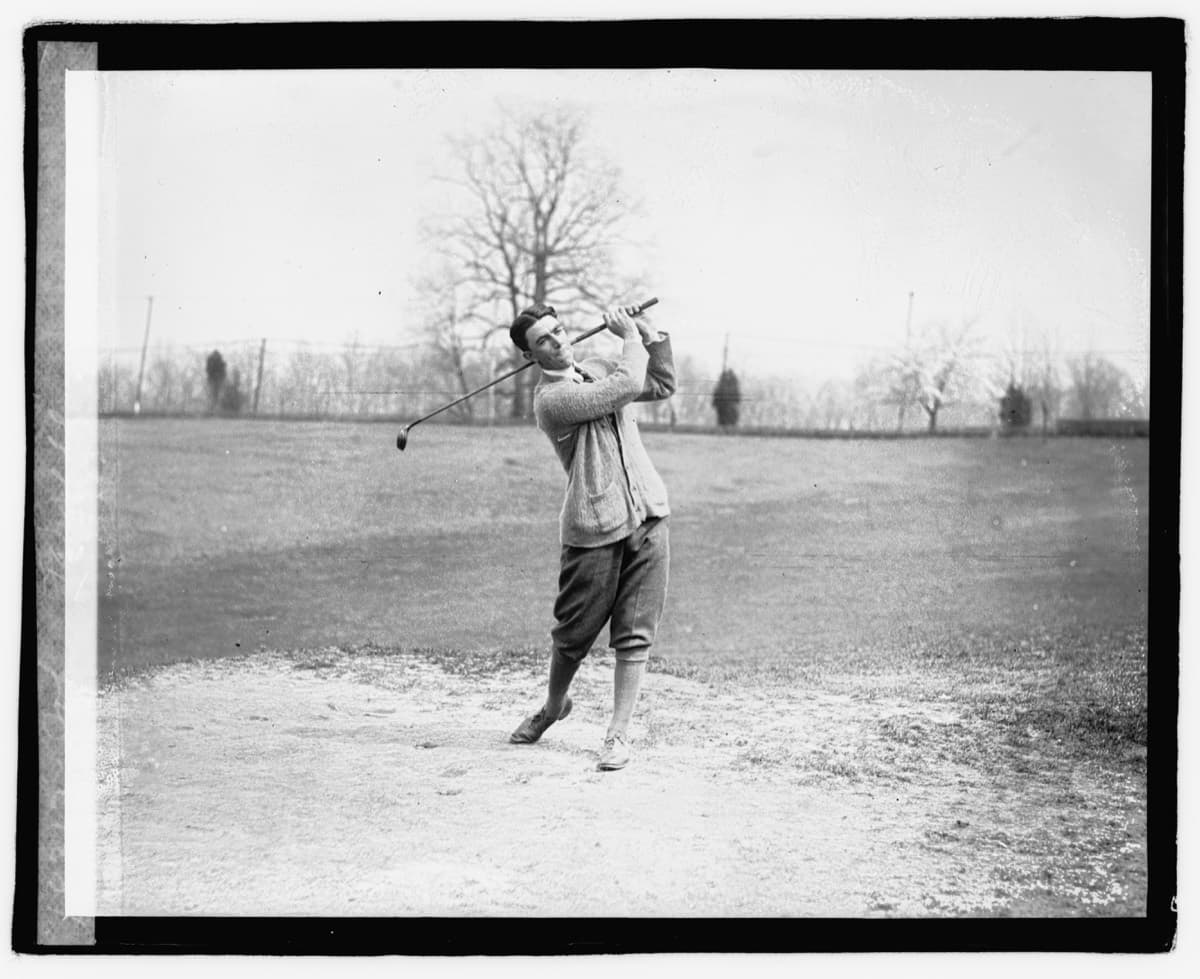
Golf arrived with Perley Flint, a Harvard graduate and keen golfer. Flint joined the company around 1910 and started experimenting with golf-specific designs: new sole shapes, different spike patterns and lighter builds. By the early 1920s Field and Flint had a strong reputation for well-made golf shoes.
The marketing was less inventive, with product names such as Anatomik, BurroJap and Skreemer. In 1923 it held a naming competition among its staff for a new line. A woman from the stitching department won the fifty-dollar prize with “Foot-Joy”. Her name was not recorded.
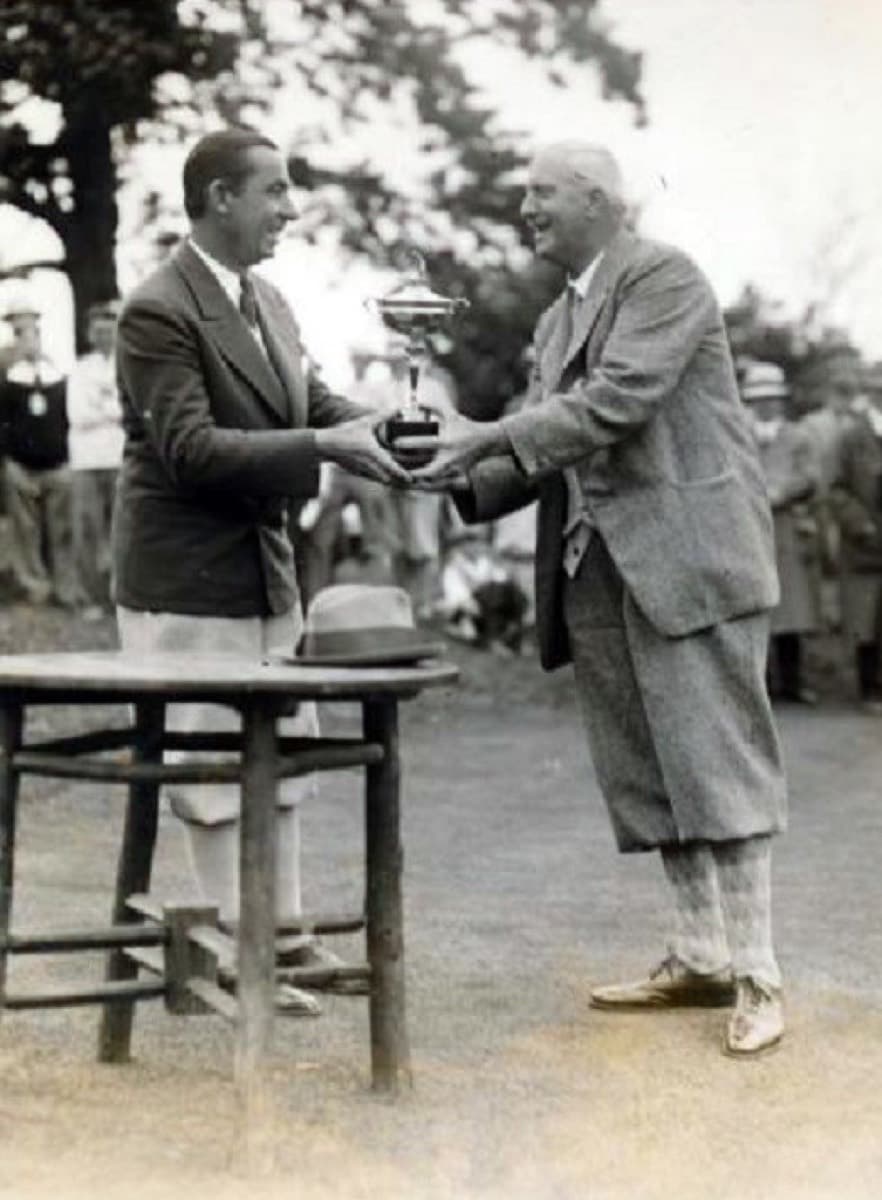
The shoes launched under the line “A shoe that’s different” and caught on quickly. A sharp salesman persuaded Walter Hagen, captain of the American side at the first Ryder Cup at Worcester Country Club in 1927, to put his team in them. The next year Johnny Farrell won the US Open at Olympia Fields in Foot-Joys, beating Bobby Jones over a 36-hole play-off to give the brand its first major. By 1945, when the PGA Tour began its first official count of the shoes worn by professionals, FootJoy was the most worn, and it has stayed there since.
The Tarlow years, 1957–1985
In 1957 the brothers Bill and Dick Tarlow bought Field and Flint through Stone-Tarlow Co, another Brockton shoemaker with deep roots in the trade. The Tarlows chose to focus the whole business on golf and moved all manufacturing into their factory on Field Street.
Bill Tarlow’s wife designed the ball-and-tee logo at the family’s kitchen table. The company was renamed Brockton Footwear Inc. in 1970 and formally took the FootJoy name in 1975. Through the 1960s and 1970s it kept a foot in each camp, making golf shoes for the course and dress shoes for everywhere else, all to the same welted standard.
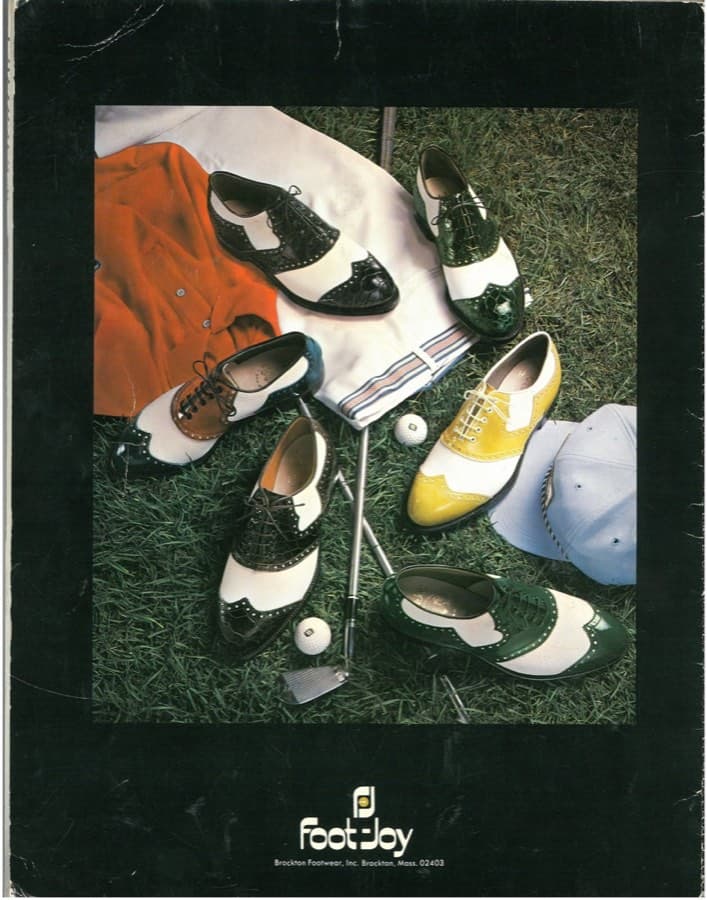
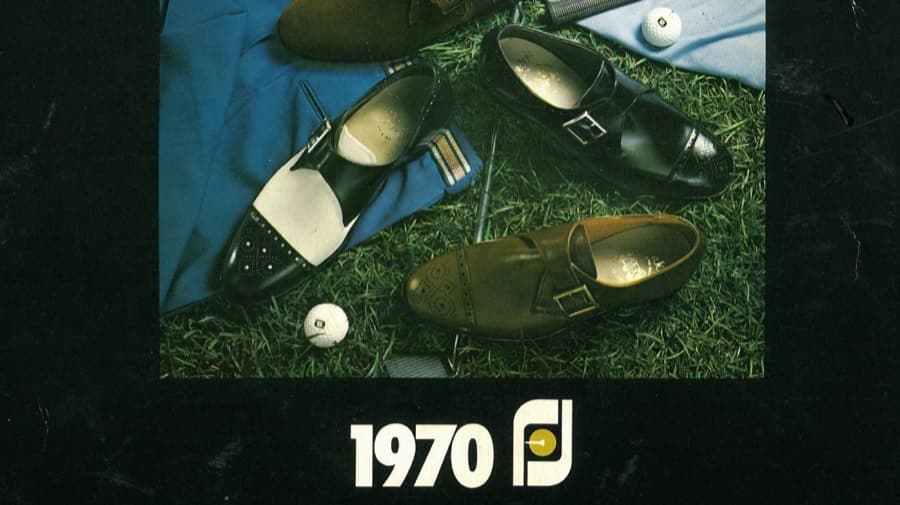
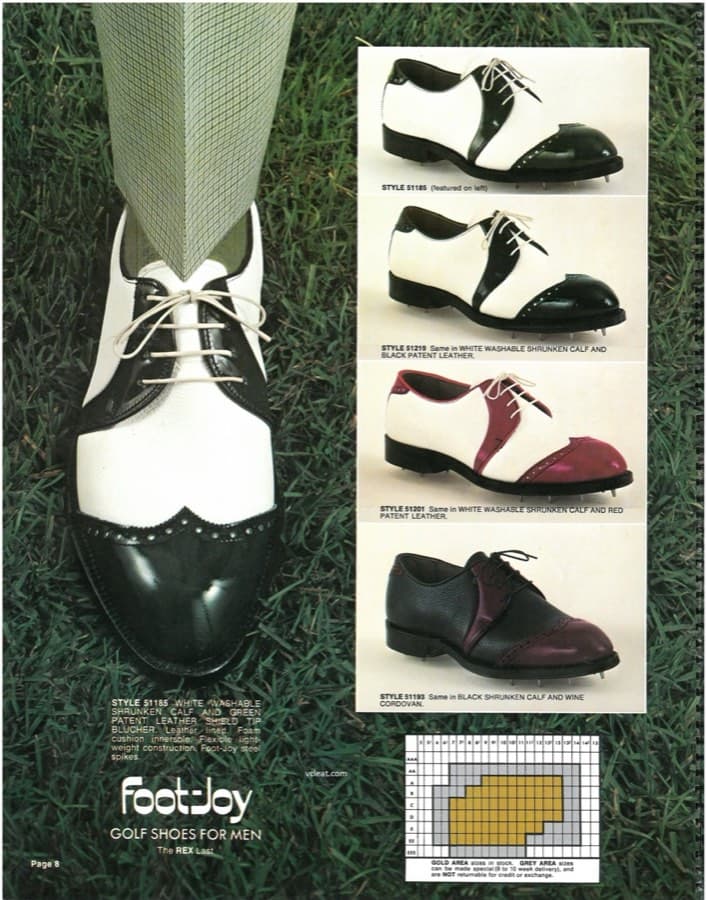
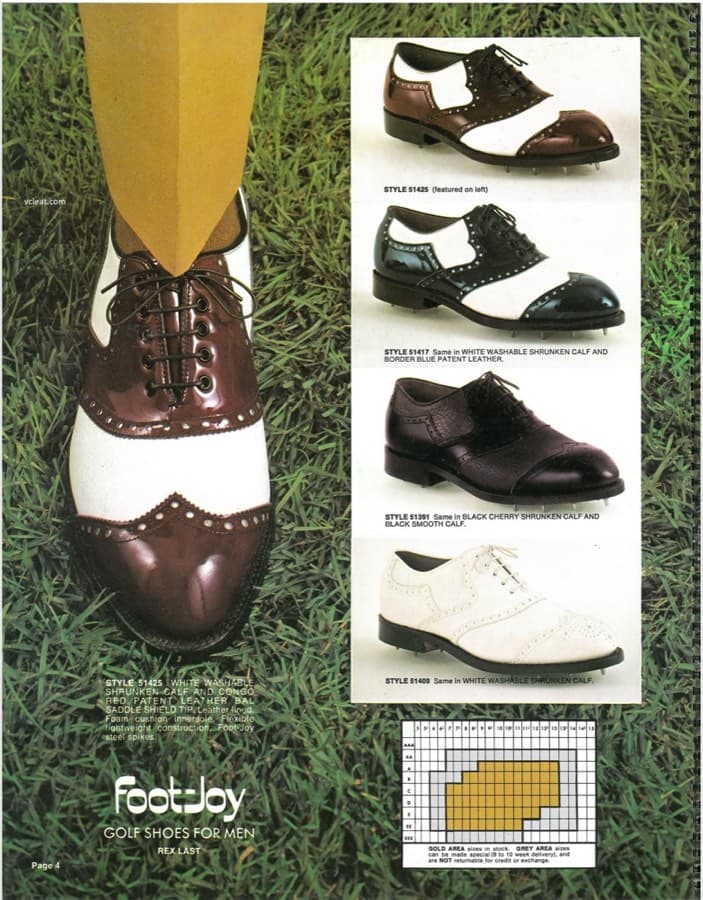
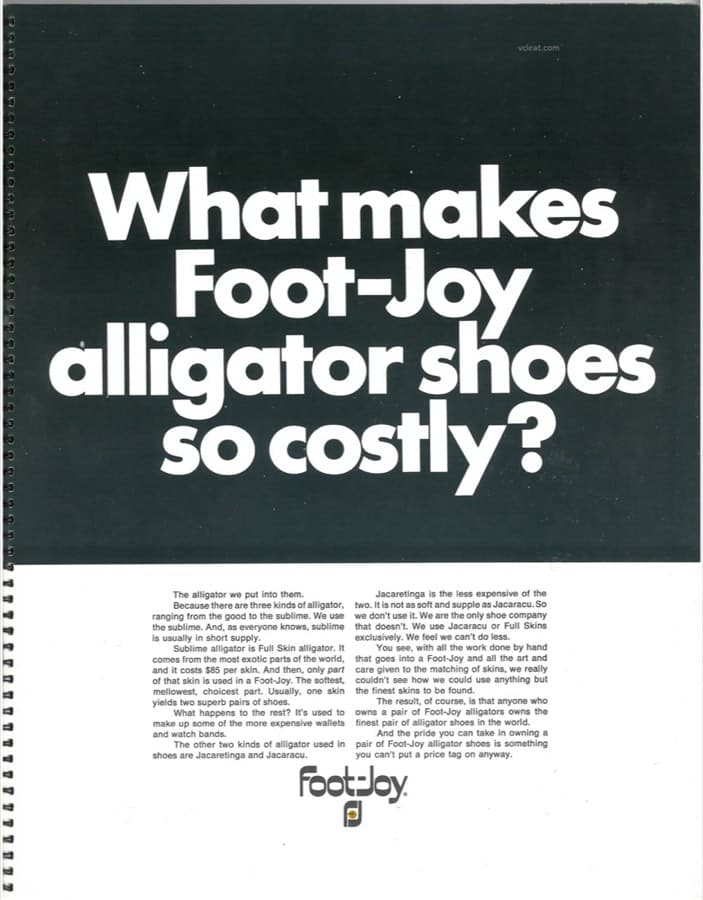
A surviving 1970 catalogue, scanned and preserved by David at vcleat.com, shows how broad the range was. There were saddles, spectators, monk straps, long wings and loafers, and a whole section of exotic leathers in alligator and turtle. Spectators carried five-digit style numbers such as 51185 and 51219, and long wings ran 77347, 77354 and 77412. A Ben Hogan collection served as the value line.
The catalogue also includes a range in Aztran, a synthetic leather similar to Corfam that BF Goodrich marketed as the material of the 21st century. BF Goodrich withdrew it in 1971, a year after the catalogue was printed.
At its height the Field Street factory was a formidable operation, employing roughly 500 people, around 300 of them shoemakers, and turning out thousands of pairs a day. Bill Tarlow was known for arriving before dawn, as early as 4 a.m. in summer, to open the windows and switch on the fans so his workers would not start the day in the heat of the upper floors. Many of those workers came from families that had made shoes in Brockton for generations. Above the factory floor hung a sign that read “Through These Halls Pass The Best Shoemakers In The World”.
“Through These Halls Pass The Best Shoemakers In The World.”
Boardrooms and picket lines, 1975–1985
Ownership became more complicated from the mid-1970s. General Mills bought a controlling stake in FootJoy in 1975 and full ownership by 1977. When General Mills later decided to sell, FootJoy’s employees held a lunchtime picket in support of the Tarlow brothers’ bid to buy the company back. The bid failed.
In 1985 the Acushnet Company, already the owner of Titleist, bought FootJoy from General Mills for about $57 million. Bill Tarlow stayed on and continued to oversee production in Brockton for more than twenty years. That same year the plant made nearly 400,000 pairs of leather-soled, welted shoes and employed over 260 people, supplying a large share of FootJoy’s sales around the world.
The Classics and the long decline, 1985–2009
The Classics name was formally adopted in the 1980s for shoes that were direct descendants of everything Brockton had made since 1957. They were Goodyear welted, built on a cork and Poron footbed, and sold in ten widths from AAA to EEEE on several lasts. For a factory-made shoe, the fit was remarkably close to bespoke.
The trouble began in the late 1980s and early 1990s. Factories in Asia perfected ways of making golf shoes that were lighter, more flexible and, above all, far more waterproof than anything a welted leather shoe could manage. Better epoxy bonding made cemented shoes, with soles glued rather than stitched, the industry standard at a fraction of the cost. Every major competitor moved in that direction, and the market went with them.
Jim Connor, who ran FootJoy from 1990, later described what followed as a twenty-year struggle to hold on to the Classics and then simply to slow their decline. The company subsidised the price to shops and customers. It introduced the Lites with a lighter sole, the Dry with a water-resistant leather sole, the Dry Premiere in 1999 and the Tour in 2004. It kept a large range of styles and colours in stock simply to keep the factory busy, and in 2004 it spent over $1 million on equipment to make the plant efficient at lower volumes.
None of it changed the underlying problem. A welted leather shoe would always be heavier, less waterproof and more expensive than a glued synthetic one. By 2009 annual production had fallen below 50,000 pairs, about 2% of FootJoy’s shoe sales worldwide, and the workforce had shrunk to around 100.
The closure and after, 2009 onwards
On 26 February 2009 FootJoy announced it would close the Brockton plant within six weeks, with the loss of 103 jobs. The factory had been making Classics Tour and Classics Dry Premiere golf shoes and a small range of men’s dress and casual shoes, all to be discontinued once stock ran out. A pair of Classics retailed at around $345 at the end. It was the last shoe factory left in Brockton.
A week later Jim Connor published a statement on the FootJoy blog. It is unusually candid for a company announcement. “I made this decision,” he wrote, and he described the plant as a craft shop rather than a factory, staffed by people who took great pride in every pair they made.
FootJoy moved quickly to fill the gap. In mid-2009 it launched the FJ Icon, which borrowed the look of the Classics, calfskin uppers with saddle and wingtip styling, on a modern build with a TPU sole and contemporary waterproofing. At around $250 it was popular on the PGA Tour until it was discontinued in 2014. The handcrafted FJ 1857 line followed in 2018 as a nod to the company’s heritage, and in 2021 the Premiere Series arrived, with models named Packard, Tarlow and Flint after the men who built the company.
Bill Tarlow oversaw Classics production until he retired in early 2009, the factory’s final year. He died in November 2022, aged 94. The golf writer Herbert Warren Wind once called him the finest unpaid golf professional in America, and in his eighties he shot his age several times.
New pairs from the last years of production still turn up for sale. The Models page explains how to identify and date one, and Buy Classics covers where to look.