How It Was Made
How a Classic Was Made
How a Classic was built, from the last to the stitched leather sole.
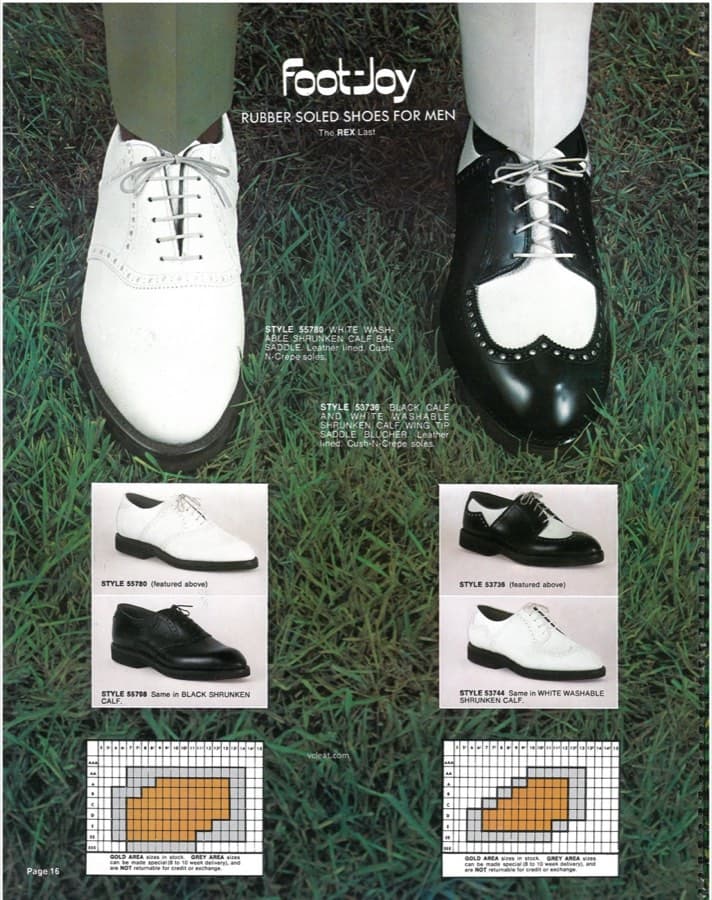
Photographs from the 1970 Foot-Joy catalogue, via vcleat.com
The welt
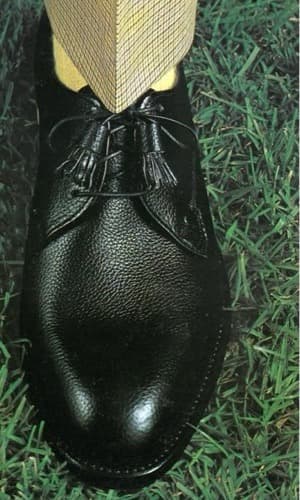
Every Classic was Goodyear welted, the same method used for the best English dress shoes. The upper is shaped over a wooden or plastic form called a last. A narrow strip of leather, the welt, is then stitched around its edge, joining the upper to the insole. The cavity underneath is filled, and the outsole is stitched to the welt with a second, separate seam.
The result is the visible rim that runs around the bottom of every Classic, and the reason a good pair could be resoled again and again. Because the sole is stitched to the welt rather than glued to the upper, a cobbler can cut the old one away and fit a new one without disturbing the shoe above it. A glued shoe cannot be treated the same way.
What went inside
The footbed was made of cork and Poron, a cushioning foam. Cork moulds slowly to the shape of the foot, which is a large part of why an old pair feels so much better than a new one. The outsole was a low, wide butyl leather sole that kept the golfer’s feet close to the ground and gave a firm base through the swing, where rubber-soled shoes lifted the foot higher off the turf.
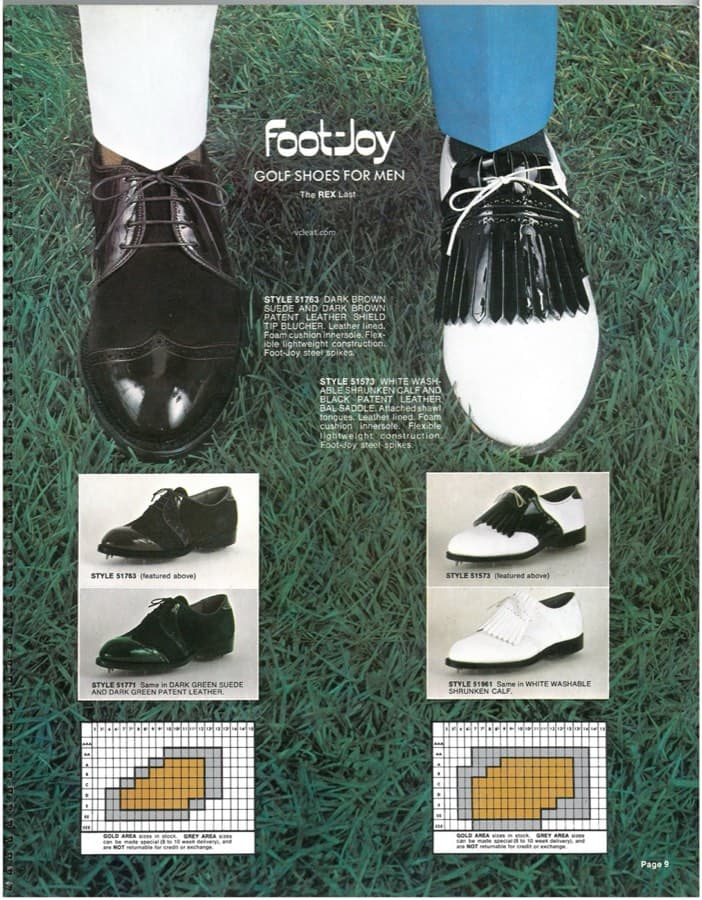
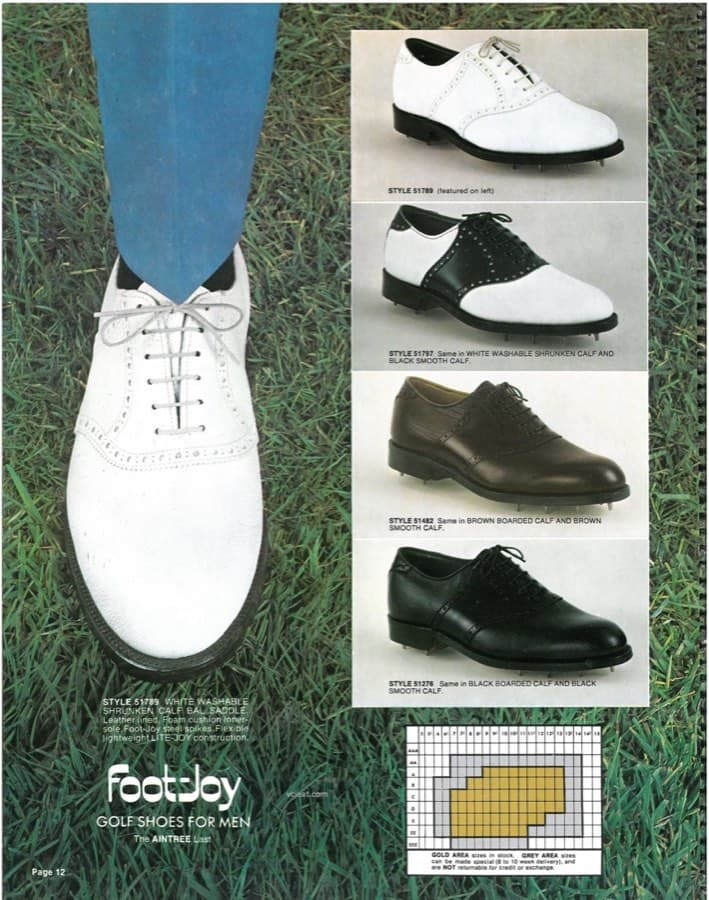
The uppers were almost entirely calfskin. The 1970 catalogue lists a surprising range of finishes: washable shrunken calf for the white saddles, boarded calf, smooth calf, cordovan, suede and patent leather in colours such as congo red, border blue and black cherry. Kilties, the fringed tongues that sit over the laces, appear on more than thirty models.
Fit
The most remarkable thing about the Classics was the fit. Most golf shoes today come in one medium width. Classics came in ten, from AAA to EEEE, on several different lasts. Each last gave a different shape of toe, instep and heel, so a golfer could find a close fit without paying for custom shoes. The 1970 catalogue names more than a dozen, most of them after golf courses: Rex, Aintree, Oakmont, Carnoustie, Troon, Hoylake, Prestwick, Augusta and Olympic among them.
Vintage sizing runs narrow by modern standards. Most buyers do best going up half a size or one width from what they usually wear.
Weight and water
A standard pair weighed about three pounds, which golfers walking eighteen holes were quick to notice. Leather soles also soak up water, and a welted seam lets it in. These were fair complaints, and they drove the later models: the Lites for weight, and the Dry and Dry Premiere for water. See the Models page for what each changed.
Spikes
In 1970 most golf models had steel spikes screwed into the sole, with a tungsten carbide tipped option on some styles and FootJoy’s own Perma-Spike on others. For street and clubhouse wear there were rubber-soled versions with Cush-N-Crepe soles. Most courses now ban metal spikes, so an old pair will usually need converting to soft spikes before it goes back on the course.
Custom and exotic pairs
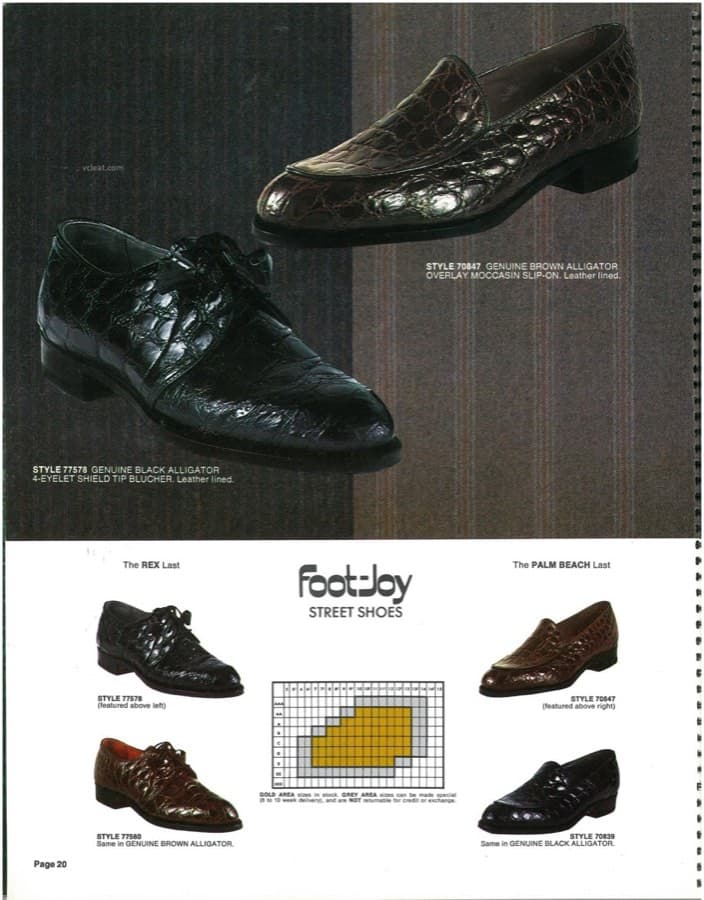
For those who wanted more, FootJoy took custom orders in lizard, alligator and ostrich, taking up to six months per pair. One collector recalled paying $900 for an alligator pair in 1979, serious money at the time. There was even an option for hand welting instead of machine welting, at which point the word “factory” hardly applied.